Boring machine put to work – the drilling of actual final disposal deposition holes starts deep down in ONKALO®
The drilling of the very first deposition hole for actual final disposal was started deep down in the Olkiluoto bedrock at a depth of more than 400 metres, on Wednesday 26 August. The operation began at 13.40 when the drill head of the massive machine known as DHBM started to cut the approximately 1.9 billion years old bedrock in Olkiluoto. With the hole diameter rather on the large side, it takes several hours to drill one hole.
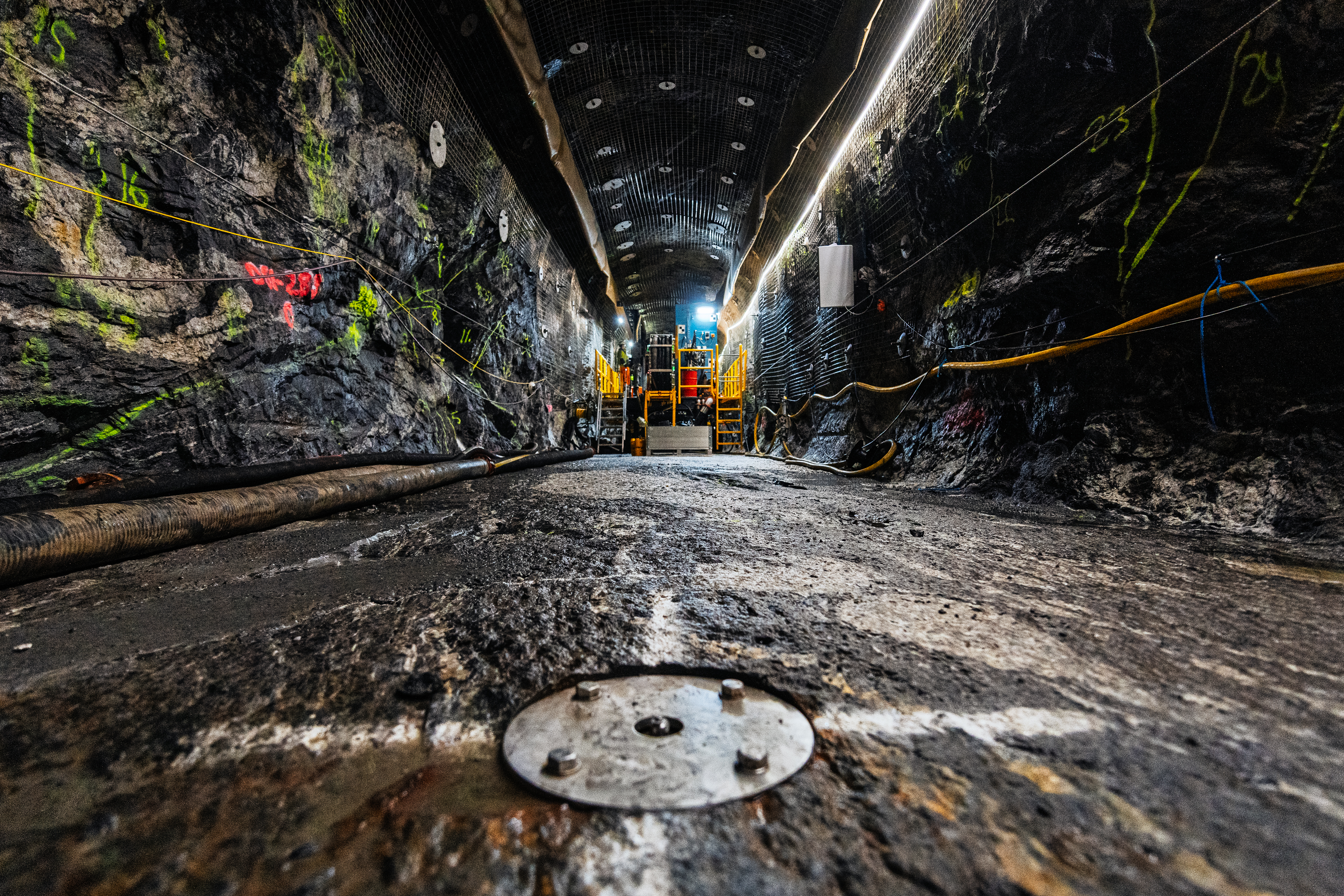
Thanks to the start readiness tests having been carried out already before the holiday season, the operation could be launched swiftly on the actual drilling day. In Tuesday’s relatively short kick-off meeting, we went through the safety aspects, technical specifications and more detailed plans for the drilling operation once again. So by Wednesday, we were ready to get down to business.
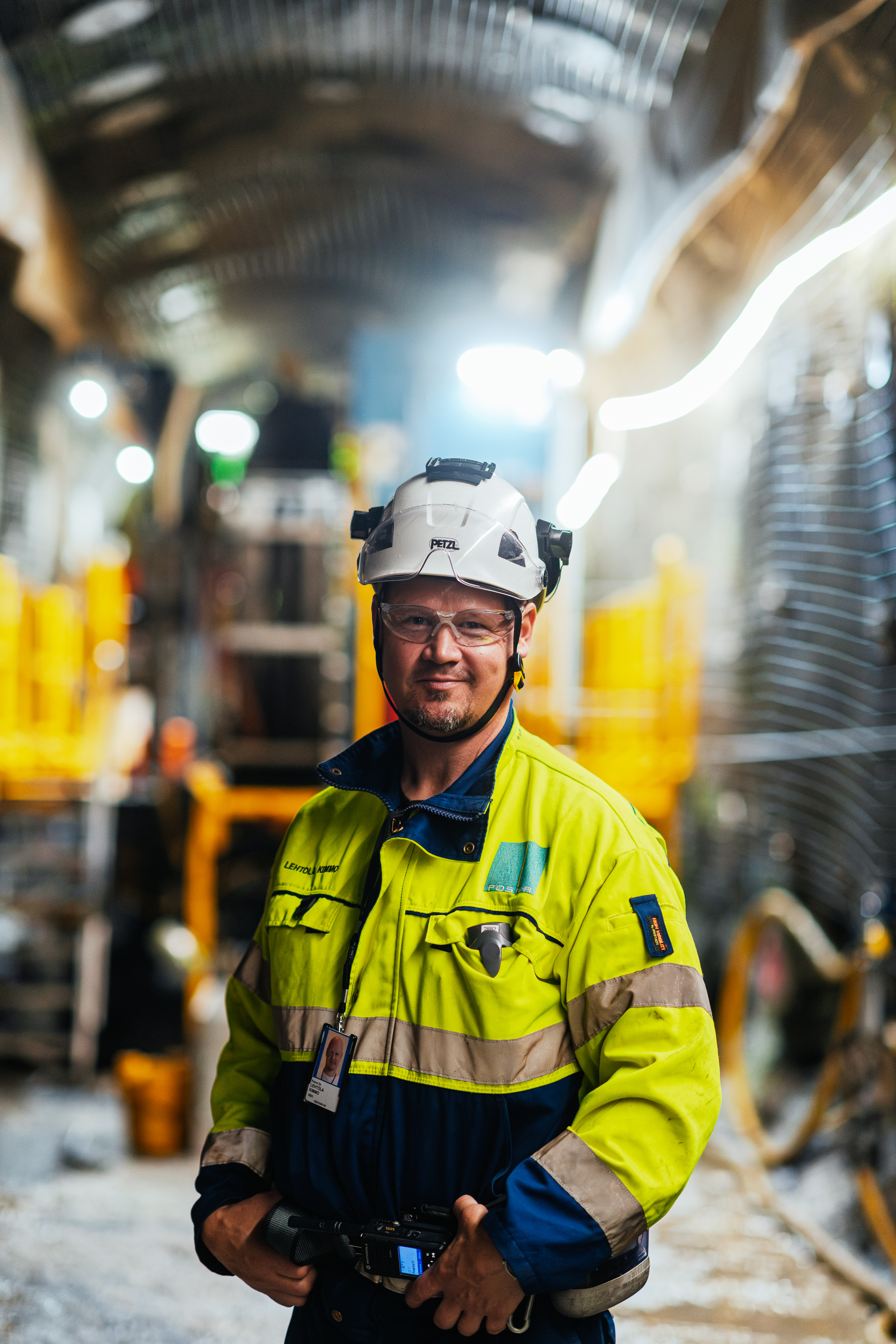
- The final adjustments to the equipment were made during the morning and early afternoon, and before long the drill was already getting to work on the rock, says Kimmo Lehtola, Posiva’s Construction Manager for Operations.
Backed up by a practice season
Despite the deposition hole that is now drilled being the first one truly intended for actual final disposal, Posiva has gathered experience in the drilling of the holes for quite some time already. A crew sent by the supplier of the machine drilled the first test deposition holes in Onkalo in the autumn of 2022, and Posiva’s team then continued directly with the next holes assisted by the supplier.
The previous experience was evident in the motions of the Wednesday work crew. The whole orchestra was clearly using the same sheet music.
- We have already practiced with a couple of holes and preparations for the drilling of the actual deposition holes have been ongoing for quite some time; this day has been much anticipated by our team. It is great to have the opportunity to drill for the first time a hole which will actually become part of the final disposal process, Lehtola says.
The first drilling operations are carried out by a team larger than usual. All five operators as well as also two rotating Supervisors will be present.
- This is part of a learning process, as well. Three of our operators already have previous experience in drilling and the other two can now practice the process while benefitting from their knowledge.
Once production operation is in full swing, the drilling work will be carried out by crews of three persons.
Eight metres down – precisely to a few millimetres
As suggested by the term, a deposition hole is the place where a final disposal cannister containing spent nuclear fuel will finally be deposited. The hole under construction is drilled vertically into the floor of a previously excavated final disposal tunnel.
The finished hole is a sizeable one, with a depth of 8.4 metres and a diameter of 1.75 metres. The large drilling scale does not mean that any compromises are allowed with quality criteria, however. The centre point of the deposition hole may not deviate from the vertical centre line by more than 25 millimetres along the full length of the hole.
The first deposition holes that are now drilled will undergo even more stringent checks than normally. The first three holes, at least, will each be measured again as soon as they are completed before continuing with the next holes in anything resembling series production.
The monitoring of the straightness of the hole does not rely only on post-drilling measurements. The drilling machine itself also monitors its position the whole time during the drilling operation. If any deviations are detected, the position of the machine can be adjusted with control cylinders during the drilling work.
If the permitted deviation is exceeded despite the monitoring, the hole will be rejected from final disposal use.
- However, we firmly trust that the tolerances are not exceeded, Lehtola assures.
Big machine for big hole
As one might guess based on the size of the hole, the machine is not exactly a lightweight either. The boring machine which arrived in Olkiluoto four years ago from Germany goes by the abbreviation of its name in English, DHBM (Deposition Hole Boring Machine).
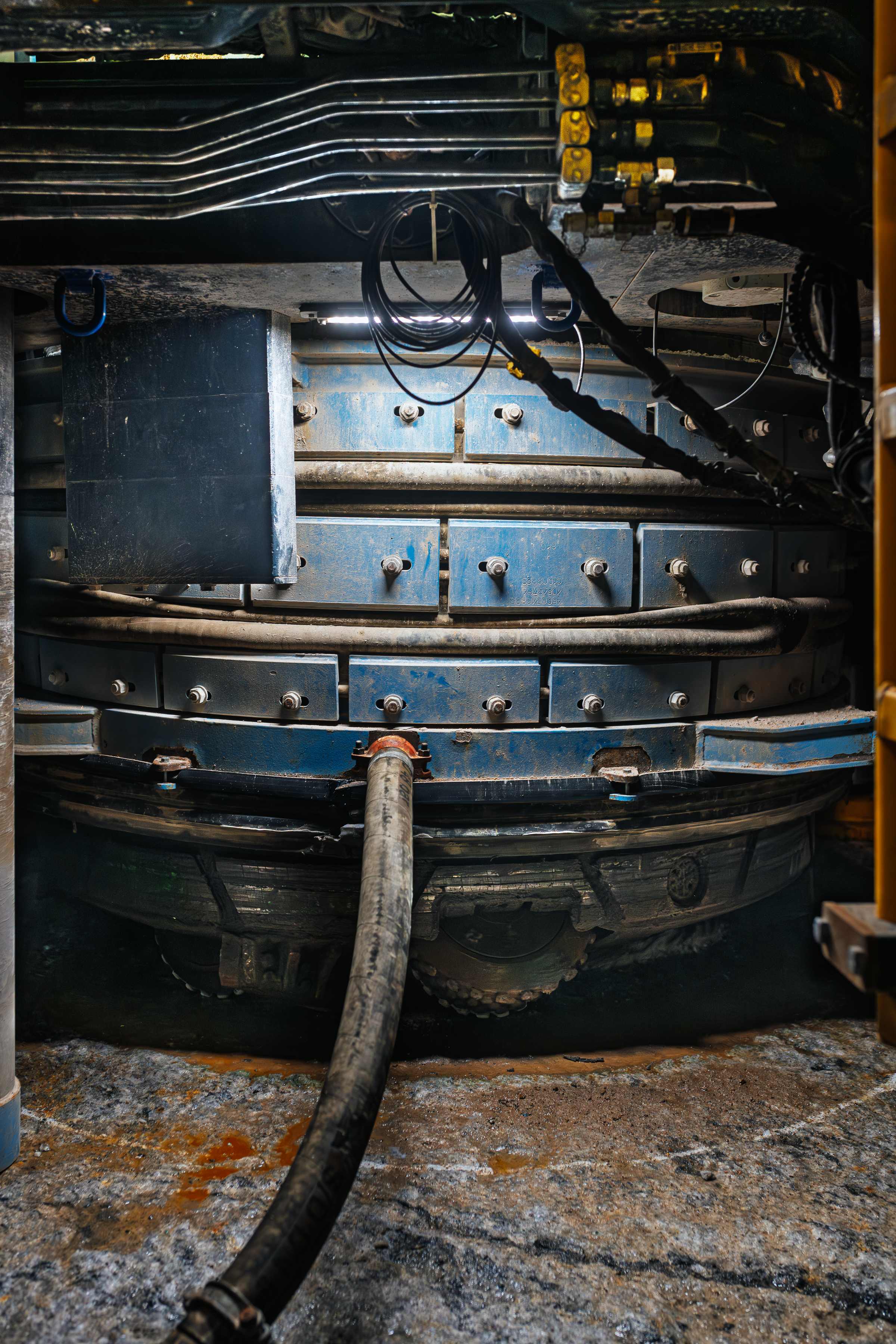
Manufactured by Herrenknecht AG, the machine is nine metres long, a little over three metres wide and almost four metres tall. It stops the scales at a respectable 78 tons.
And there’s more. The actual boring machine also needs to be accompanied by a 22-ton energy unit responsible for electricity and power supply, as well as an 18.5-ton separator which separates loosened rock fragments from the water used in drilling. The drilling of a large hole produces large amounts of cuttings that have to be removed.
Ten-hour drilling session
The actual boring machine was placed accurately in position for the hole to be drilled in good time in advance and supported firmly in place on both floor and ceiling.
A hole of this size is not drilled in the bedrock very quickly. According to Lehtola, the drilling of an eight-metre hole in ONKALO takes about ten hours of effective drilling time.
-The harder the rock, the slower the drilling process, but ten hours is a pretty good rule of thumb in our conditions, Lehtola says.
It must be said, though, that a lion’s share of the total time is spent doing something else than drilling. Preparing and positioning the machine, removing it, and transfers in general take time. Time is also needed for the cleaning and drying of the finished hole.
Once the drilling operation becomes part of the normal production process, the goal is to produce about two finished deposition holes in one working week, he estimates.
From practice to real work
The first final disposal tunnel that is now being worked on is about 330 metres long and will house a total of thirty or so drilled deposition holes. However, the plan is not to jump directly into assembly line production with the drilling of the holes.
As mentioned, once these first holes have been drilled, their geometry and quality will be verified to ensure that the completed holes meet the requirements set for them. Only after this verification can we confirm whether the first disposal hole approved for actual final disposal has been created in the bedrock of Olkiluoto. We will know more about this next week.
Share