Posiva prepares for 2027 – with an even stronger focus on the operation phase
Posiva has started planning its activities for 2027 at a time when the company is preparing to move into the operation phase of spent nuclear fuel final disposal. The work for the coming year is being built together with the entire personnel of Posiva and its subsidiary Posiva Solutions: the first half considered the future on 22 September, while the other half will take part in a similar event in October.
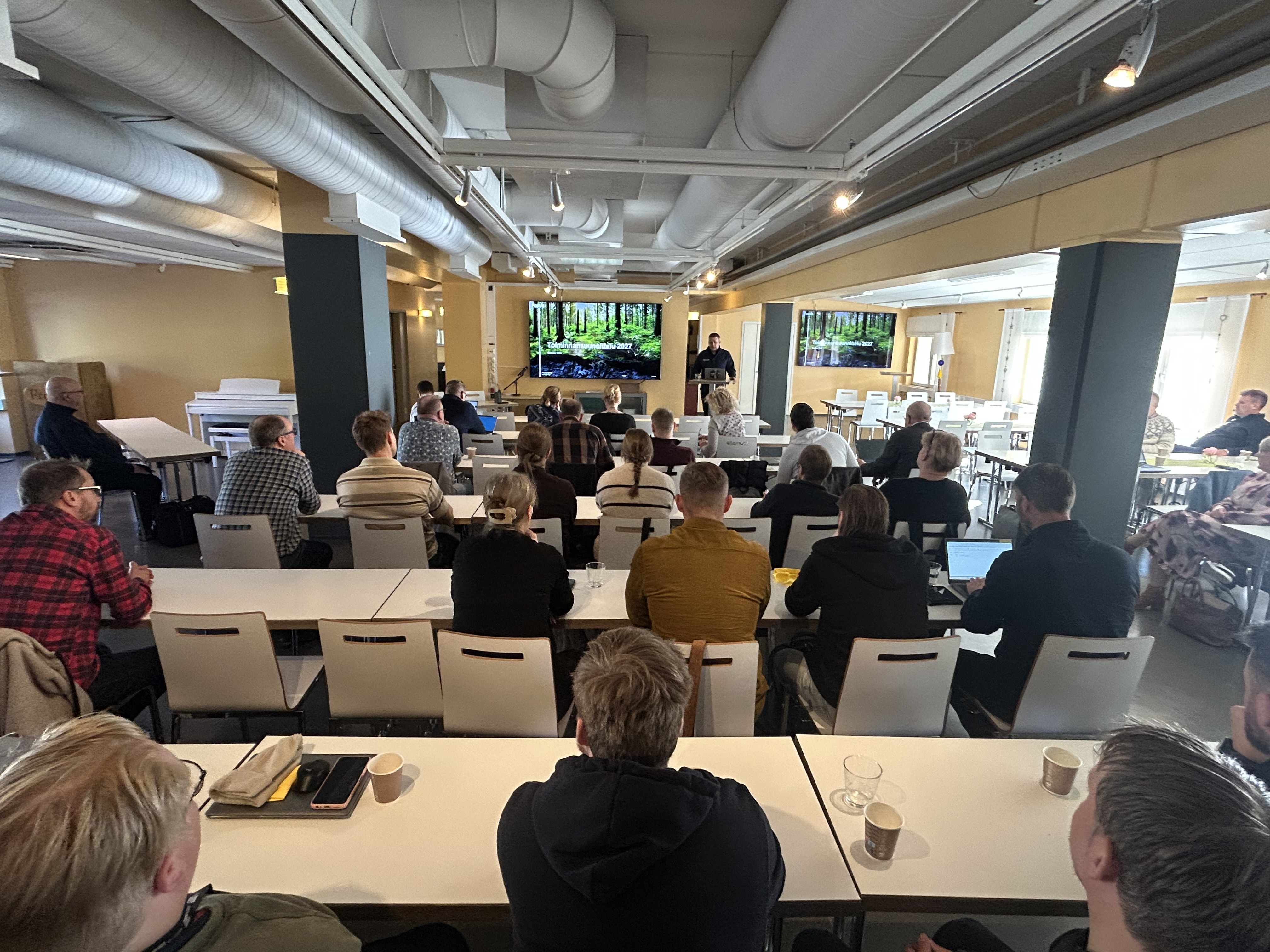
Etappi 22, a meeting and event venue in Rauma, was fittingly filled with final disposal professionals on 22 September as the Posiva community gathered for the first of two annual planning days to consider what needs to be done next year – and how it can be done even better.
- Ask bold questions and you will get bold answers, read the slide in large lettering when President and CEO Ilkka Poikolainen opened the annual planning day, which began at noon.
The idea aptly describes Posiva’s way of building its future operations. The objectives and activities for 2027 have already been prepared and discussed with supervisors, and now the expertise and views of the entire personnel are being combined with this preliminary planning.
In practice, every Posiva employee will have the opportunity to contribute to what the company’s work next year should look like.
-The aim is to build an operating plan in which the objectives are as clear and measurable as possible and their implementation can be monitored throughout the year, Poikolainen summarised.
The operation phase changes the way of working
Although the more detailed preparation of the plans with the entire organisation only began now, one thing is already clear: Posiva’s transition towards the operation phase will be strongly reflected in the work planned for 2027.
The change will be visible in the objectives, competence needs and everyday work alike. The plans for next year include the introduction of new indicators for the operation phase, the use of initial operating experience, preparing a long-term production plan and developing the management of production data.
At the same time, work will continue to develop the readiness of the encapsulation plant and final disposal facilities, strengthen operational competence and prepare the next safety case.
Safety will remain the foundation of all operations. The objectives for 2027 emphasise accident-free operations, disruption-free operations and ensuring the competence and resources required for the activities. In the group work during the annual planning day, future operations were examined from several different perspectives.
The personnel discussed topics such as future opportunities and threats for Posiva, the use of artificial intelligence and what the operation phase requires from nuclear industry professionalism. The groups also examined how to align final disposal operations with the expansion of the final disposal facilities, as well as the further development of Posiva’s values. A wealth of proposals and ideas was gathered during the day and will now be taken forward in the continued preparation of the operating plan for 2027.
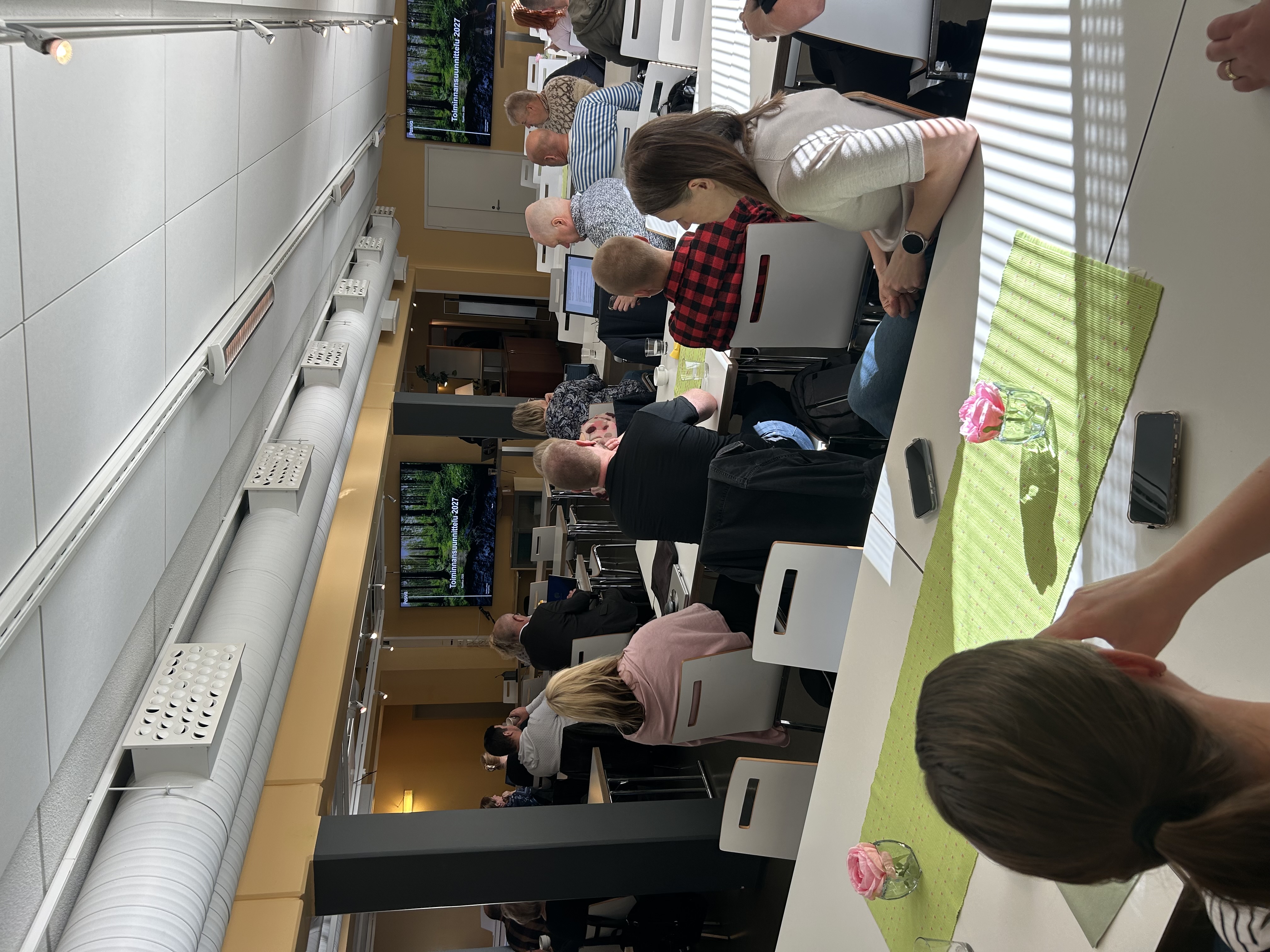
Personnel reflections on the day
Occupational Safety Specialist Juho Syren sees bringing the entire organisation together around the same table as a good concept.
- This gives everyone a genuine opportunity to influence what is done in the company and how it is done, Juho Syren says, adding that involvement has not remained only at the level of discussion.
- I have followed this model for several years now, and a remarkably large share of the outcomes of the annual planning days has ended up being implemented in practice and becoming part of broader operating plans. For example, the safety-related discussions once helped me take forward many issues that would otherwise have been difficult to bring out from people.
Expert Suvi-Tuulia Kukko from Posiva’s subsidiary Posiva Solutions also highlights as one of the strengths of the planning day the fact that people get to exchange ideas across the usual boundaries of everyday work.
- I like this practice. It is nice to also see colleagues you do not work with so often in everyday life and to hear their thoughts. At the same time, it creates multidisciplinary discussion that goes beyond coffee-table conversations, where different perspectives, concerns and ideas are heard, Kukko says.
Development manager (long-term safety) Barbara Pastina considered it important that the day showed how widely the staff share the same vision for the year ahead, as well as similar views on the challenges ahead.
– A day like this is an excellent opportunity to let our voices be heard and to discuss ongoing challenges and ways we can address them together. It is also motivating to see how staff input to the annual planning is translated into concrete actions for the following year. It shows that the planning takes into account both the high-level management view and the implementation-level view – where the rubber meets the road, Pastina says.
Expectations were met
At the end of the day, Poikolainen said that the event had provided exactly what was needed for the action plan.
- In practice, this means concrete steps and proposals for what should be done next year, he summarised.
The work will continue in October, when the other half of the Posiva community will take part in its own annual planning day. After that, the most important main measures will be identified from the overall input, and the plans will be further refined within the teams. Finally, the shared ideas will be turned into objectives and practical actions.
- This gives us a good basis to continue. We have major objectives for next year and excellent plans to support them. Thank you all for a great day, Poikolainen concluded.
Text and Photos: Ville Kulmala
Share