Acceptance tests of Buffer Installation System (BIS) demonstrate functionality of technology
The unique technological solutions developed for the final disposal project of spent nuclear fuel again made progress at Posiva when acceptance tests were completed successfully on the installation and transfer devices of the Buffer Installation System (BIS) in Parkano in early June. Two special vehicles transported the ca. 14 metres long devices to the Pori testing station for the implementation of the system automation and its integration to the control system of the final disposal facility.
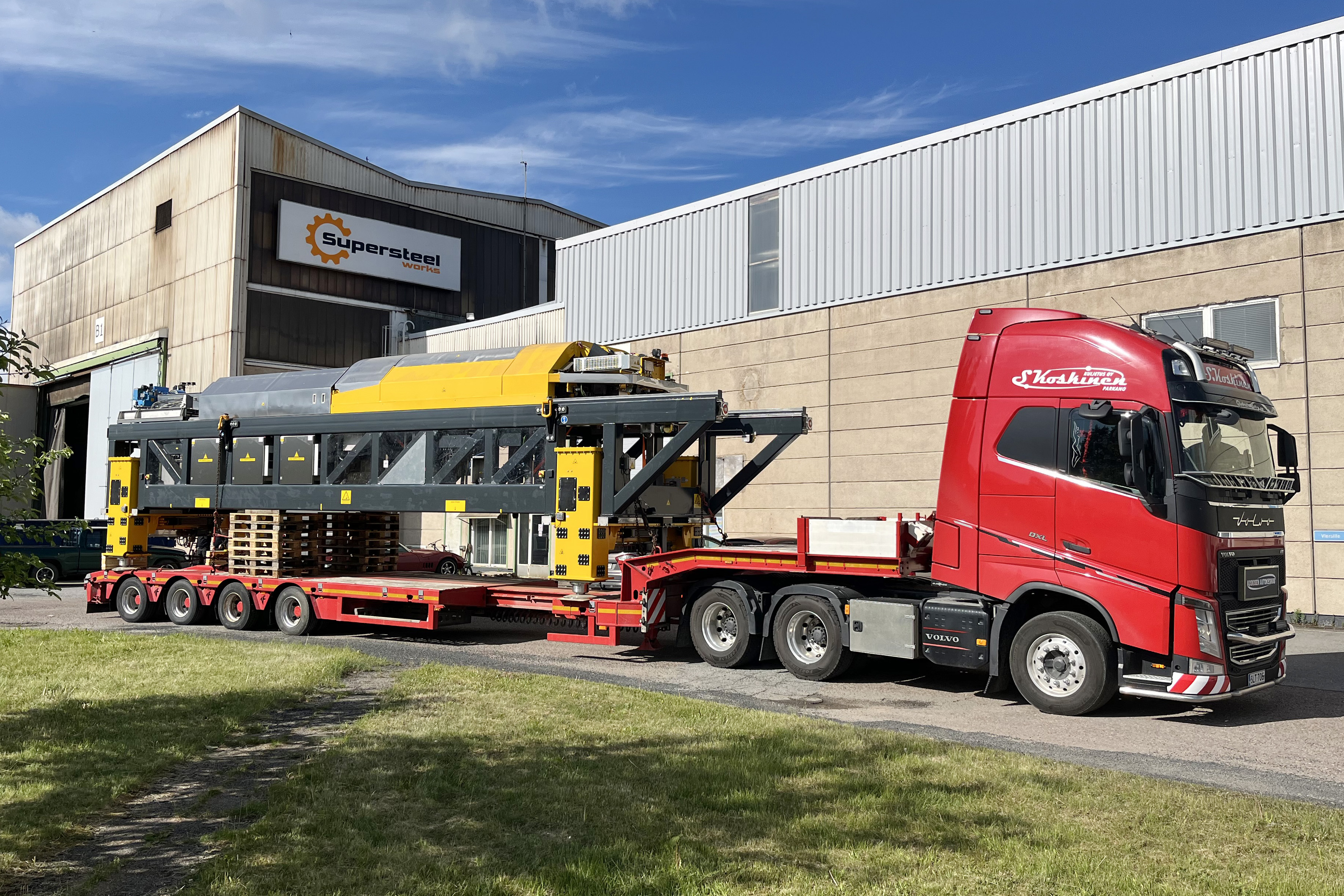
The system has been under development by Posiva for several years. World’s first ever Buffer Installation System for the final disposal of spent nuclear fuel has been designed and built exclusively by Finnish experts. The buffer installation system, BIS, is an assembly of several devices for the transfer and installation of the bentonite backfill between the final disposal canister and the rock.
- The system comprises an installation device, a transfer device, and a transport container. The transport container is used to transport bentonite blocks and granular bentonite to ONKALO® from an above-ground storage. The blocks and the granular material are then carried by the transfer device from the container to the final disposal tunnel where the installation device installs the backfill between the canister and the rock, explains Eero Väisänen who works as the Project Manager for Equipment Integration at Posiva.
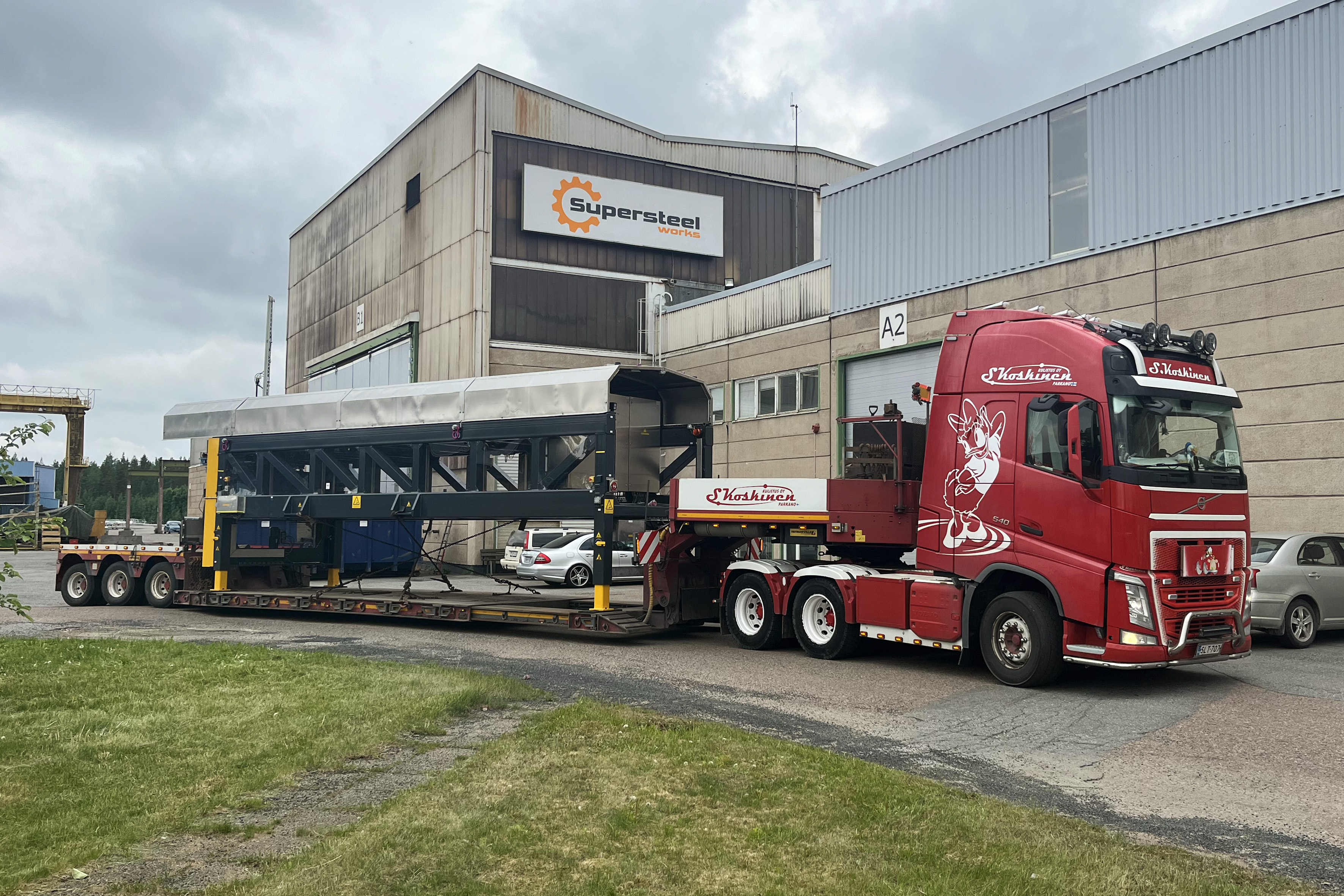
The acceptance tests of the installation and transfer equipment carried out in Parkano in early June demonstrated the functionality of the system under manual control. The automation and data transfer systems needed for remote control operation will be built at the Pori testing station. The station provides a simulation environment for the testing of BIS.
- The installation and transfer devices of BIS run on AGV platforms. The devices navigate independently in the final disposal repository and feature an abundance of technology facilitating remote control and automation, such as machine vision, laser sensors, and cameras.
- The devices have been designed as autonomous equipment due to the radiation hazard and reasons of occupational health and safety. The implementation of automation and remote control systems naturally requires a high degree of expertise and testing, Väisänen says.
Canister surrounded by over 20,000 kilograms of bentonite clay
Solid bentonite blocks are installed underneath and on top of the canister. The nearest blocks surrounding the canister are like pineapple rings with a hole the size of the canister in the centre. These blocks are installed in the deposition hole to about half the height of the hole before the copper canister that contains the spent nuclear fuel is transferred to the final disposal tunnel.
- The final disposal canister is then deposited in the hole and the installation is completed with bentonite blocks and granulated bentonite. The canister is surrounded by over 20,000 kilograms of bentonite clay.
Bentonite isolates the final disposal canister from the surrounding rock. It swells when wet, prevents water movement around the canister, and acts as a buffer should any rock movement occur over the long time horizon. The bentonite backfill surrounding the canister is part of the multi-barrier principle applied to the final disposal of spent nuclear fuel.
Once the implementation of the automation has been successfully completed in Pori testing station, the Buffer Installation System will be transported to ONKALO®. The transfer device has been designed by Comatec and the installation device by Etteplan. The installation and transfer devices have been manufactured by Parkano-based company Supersteel. Comatec has designed also the transport container which was manufactured by IS Works.
Text: Pasi Tuohimaa
Share