This is how buffer transfer and installation device for Posiva’s final disposal canister works
In the final disposal of spent nuclear fuel carried out by Posiva, the fuel packed in copper canisters is placed into 8.5 m deep underground deposition holes. The canisters are in the hole surrounded by a buffer made from bentonite clay which seals the hole and protects the canister.
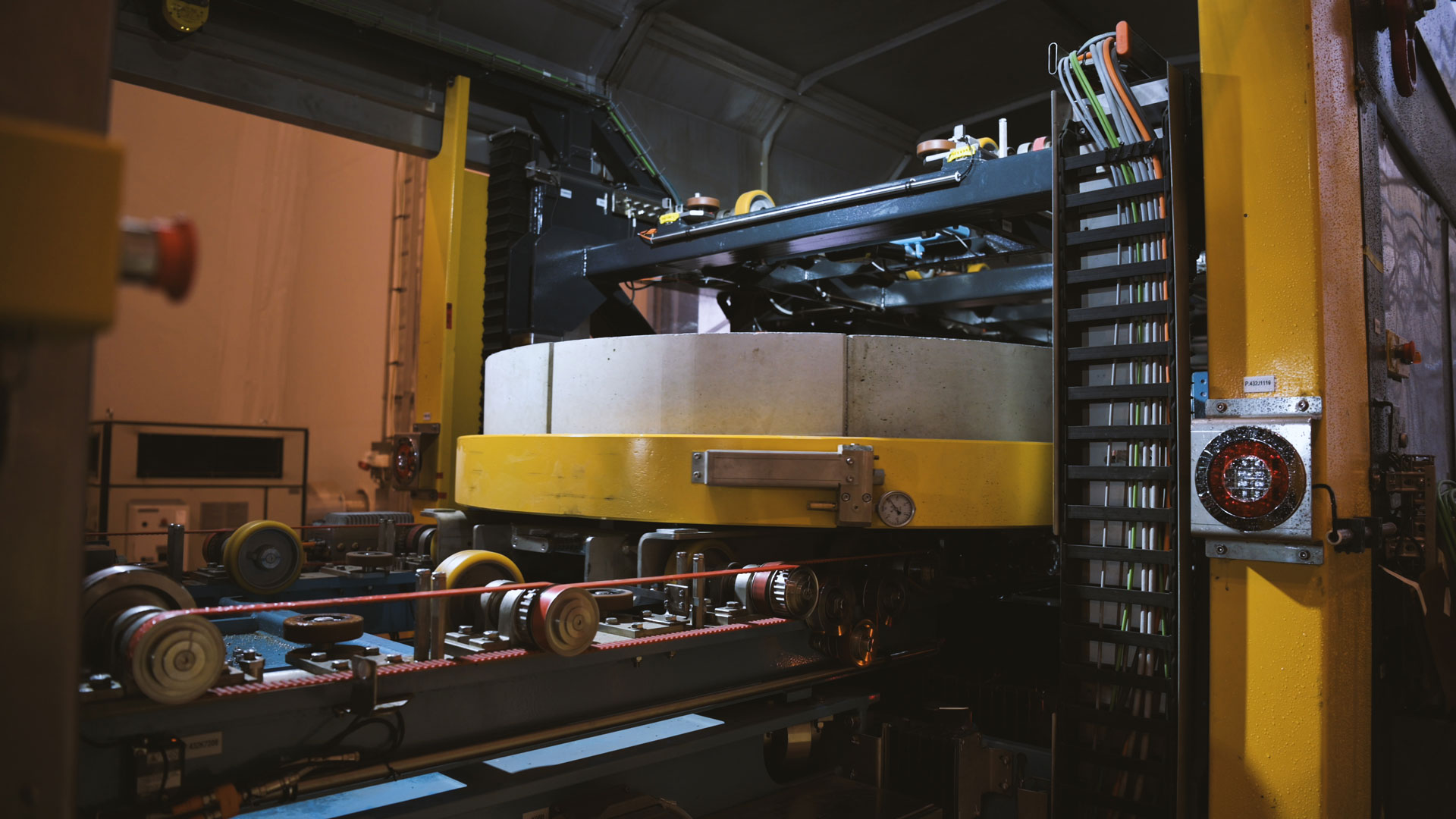
The video shows how Posiva’s combined buffer transfer and installation device places the bentonite buffer into the hole at the Olkiluoto testing station. The equipment is enormous in size, but the installation process literally deals with millimetres. The deposition hole accommodates 28 layers of bentonite buffer blocks with only plus/minus five millimetres of wiggle room in the hole.
Technical data on combination device
Installation device
- Length 12.5 m
- Width 2.93 m
- Width with AGV platform 3 m
- Max. driving height 3.8 m
- Unloaded weight 24 t.
Transfer device
- Length 11 m
- Width 3 m
- Width with AGV platform 3.1 m
- Driving height 12 m
- Unloaded weight 12 t.
The copper cylinder installed inside the bentonite buffer together with its welded copper bottom and cover forms a leak-tight copper canister with five centimetres thick walls. In final disposal, the canister acts as a corrosion barrier for the canister insert made of cast iron. The insert accommodates 12 fuel elements.
Text: Pasi Tuohimaa, video: Tapani Karjanlahti
Posiva Oy is the leading final disposal operator in the world, aiming to start the final disposal of spent nuclear fuel in 2026 at the ONKALO® facility excavated deep in the bedrock.
Share