Four decades of work in one application
The Radiation and Nuclear Safety Authority of Finland (STUK) is expected to provide during the summer its statement on Posiva’s operating licence application to the Ministry of Economic Affairs and Employment of Finland. This statement is of significance as the operating licence application is not just one document, but the sum total of an exceptionally long period of demanding work.
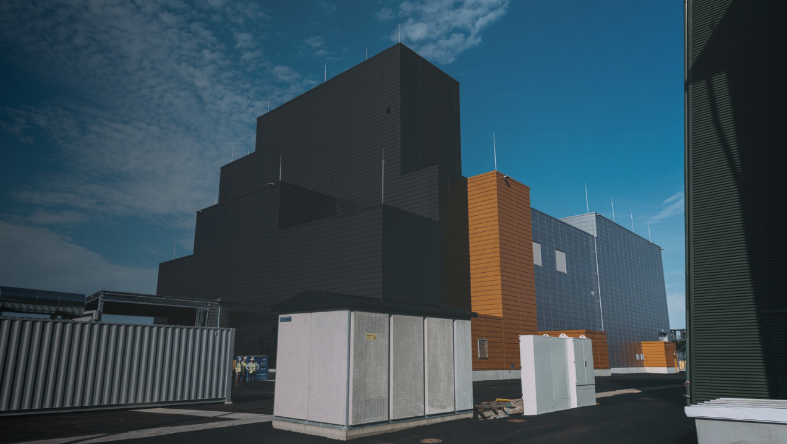
When Posiva filed the application with the Government at the end of the year 2021, it did so against a background of more than 40 years of preparations for the final disposal of spent nuclear fuel. The operating licence, which pertains to the construction of the first solution of this scale, is based also on a huge amount of research, plans, safety assessments, and practical implementation. It highlights decades of work aiming at demonstrating the safety of implementing final disposal today, in the upcoming decades, and far into the future.
According to Samu Myllymaa, who heads the Operating Licence Project of Posiva, the operating licence application with associated documentation consists of almost 20,000 pages.
- The application submitted to the Ministry and the Government is a concise summary of just under 500 pages. The application itself is about ten pages and the rest are enclosures consisting of individual documents referring to new research, analysis and background reports, Myllymaa says.
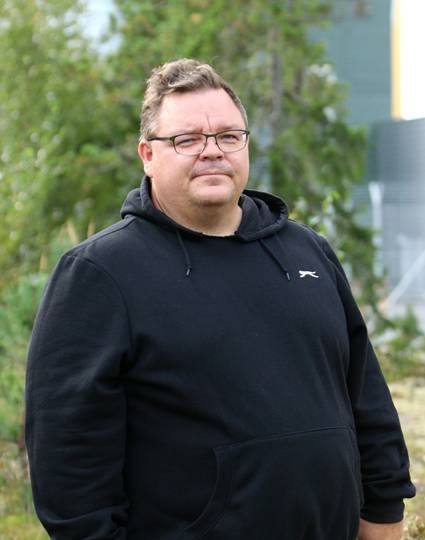
- The documentation submitted to STUK is almost 20,000 pages in total. When all the versions of the documentation prepared during the review process are counted, the total number of pages approaches one hundred thousand.
The timeline alone reflects the scale of the work. Posiva has been preparing for final disposal for more than 40 years and the official project path has run in stages from decisions-in-principal to the construction licence and to the operating licence application. The Finnish Government endorsed the progress of the project already in the early 2000s, the construction licence was issued in 2015 and the actual construction work started in late 2016. The construction of the underground research facility ONKALO had started already before that in 2004.
Several generations worth of work
In practice, the application for an operating licence is a compilation of all the work carried out by several generations from geology to technology, from safety analyses to cooperation with authorities. According to the Ministry of Economic Affairs and Employment, the subject matter of the application is a plant designed to be in operation for decades, with final disposal operation estimated to continue until the 2120s. This alone shows that, instead of a regular industrial licensing process, we are talking about an entity with complex social and technical aspects.
One of the largest work packages has covered efforts on research and safety. In practice, the verification of safety has been based on in-depth research on Olkiluoto bedrock, the assurance of the performance of the various barriers of the final disposal concept – rock, bentonite clay, and canister – as well as the demonstration of the durability of the overall solution over a prolonged period time.
The work related to safety is not limited to theory, either. The application and the enclosures to it have had to describe how the encapsulation plant and the final disposal repository are built, how they are used, how maintenance is organised, and how the safety of the personnel operating the plant can be ensured. The role of the Radiation and Nuclear Safety Authority emphasises the complexity of the work: to support the operating licence, the regulatory authority must be convinced of the safety of the plant over both short and long term.
The work behind the application is also witnessed in concrete, steel, and rock. The preparatory work for the operating licence could not be carried out only on paper, separate from the actual facility. Instead, years of building work and commissioning activities have accompanied the theoretical work.
High work load also in practical operations
The work culminating in the operating licence application has involved a lot of practical operations as well: a planned solution is not enough, it must be shown to function in the real operating environment. Alongside all this work, supply chains have been built, processes set up for component acquisitions, and the operations of the above-ground plant and the underground facility adapted to each other.
The work focusing on the capabilities of the organisation has been at least equally significant. The operating licence does not cover only buildings and technical systems, but also the organisation’s capability to start operation in a safe manner.
In 2025, Posiva announced that it had started the Trial Run of Final Disposal, without the actual spent fuel at this stage. The purpose of the Trial Run is to test the performance of both the equipment and the organisation. The organisational structure was also reformed, operators recruited and staff positions reorganised at this stage.
Everything is based on understanding that as the first final disposal facility in the world, not only technical competence is needed but also strong safety culture, clear leadership, and policies that satisfy regulatory assessment criteria. STUK has, indeed, stressed that the review includes an enhanced assessment of the capabilities of Posiva’s organisation to allow the start of the operation of the facility. This shows that the work carried out for the operating licence application has been as much about people and procedures as structures and documents.
Huge effort
The amount of work is perhaps most clearly evident in the extent of the documentation. STUK has concluded that as a whole, the review of the operating licence application has proceeded well. However, the review process has been prolonged by the sheer extent of the documentation, the requested updates, and the technical changes made by Posiva. According to the regulatory authority, the completion of the statement has been dependent on when all the documents needed for the safety assessment have become available.
With the first of its kind final disposal facility ever, the licence application must also meet exceptionally stringent scrutiny.
- Now that the granting of the operating licence is about to become reality, one must admit to a feeling of emptiness. The prevailing feeling is one of relief, although the work naturally goes on and new challenges are waiting, Myllymaa says.
- The sense of joy is based on knowing that, even if one has been just one small piece of it all, we are at the start of a long path. It is a privilege to be able to witness the start of the facility’s operation. There are quite a few people who will miss this stage.
The brief answer to how much work was needed for Posiva’s operating licence application is: enormously. It is not just about writing one application, it is about decades of joint efforts to advance research, construction, technical development, safety culture, the Trial Run, and a dialogue with authorities, all in parallel.
Because of this, the operating licence application may well be described as the collation point of one of the most enduring undertakings in the history of Finnish energy and industry.
Text: Pasi Tuohimaa