Significant accomplishments for Posiva – Successful week of testing moves final disposal forward
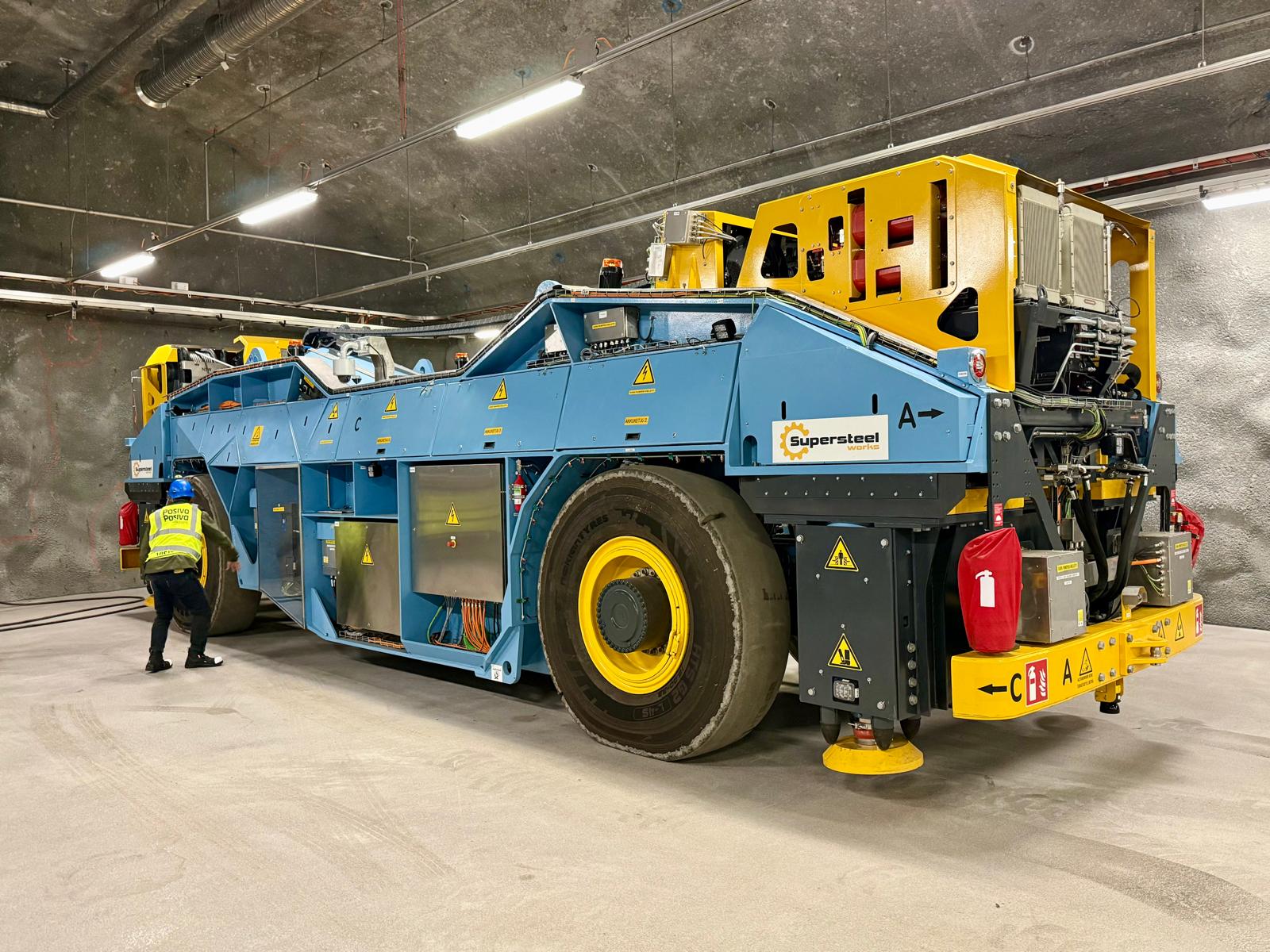
During the past week, Posiva achieved a couple of significant milestones in preparation for the final disposal of spent nuclear fuel. For the first time, a canister was installed inside buffer blocks in a hole. Without actual fuel, of course. After the successful installation, the canister transfer and installation vehicle, also known by its Finnish abbreviation KSAA, was transported to the underground final disposal facility for the next tests which were also completed at the end of the week.
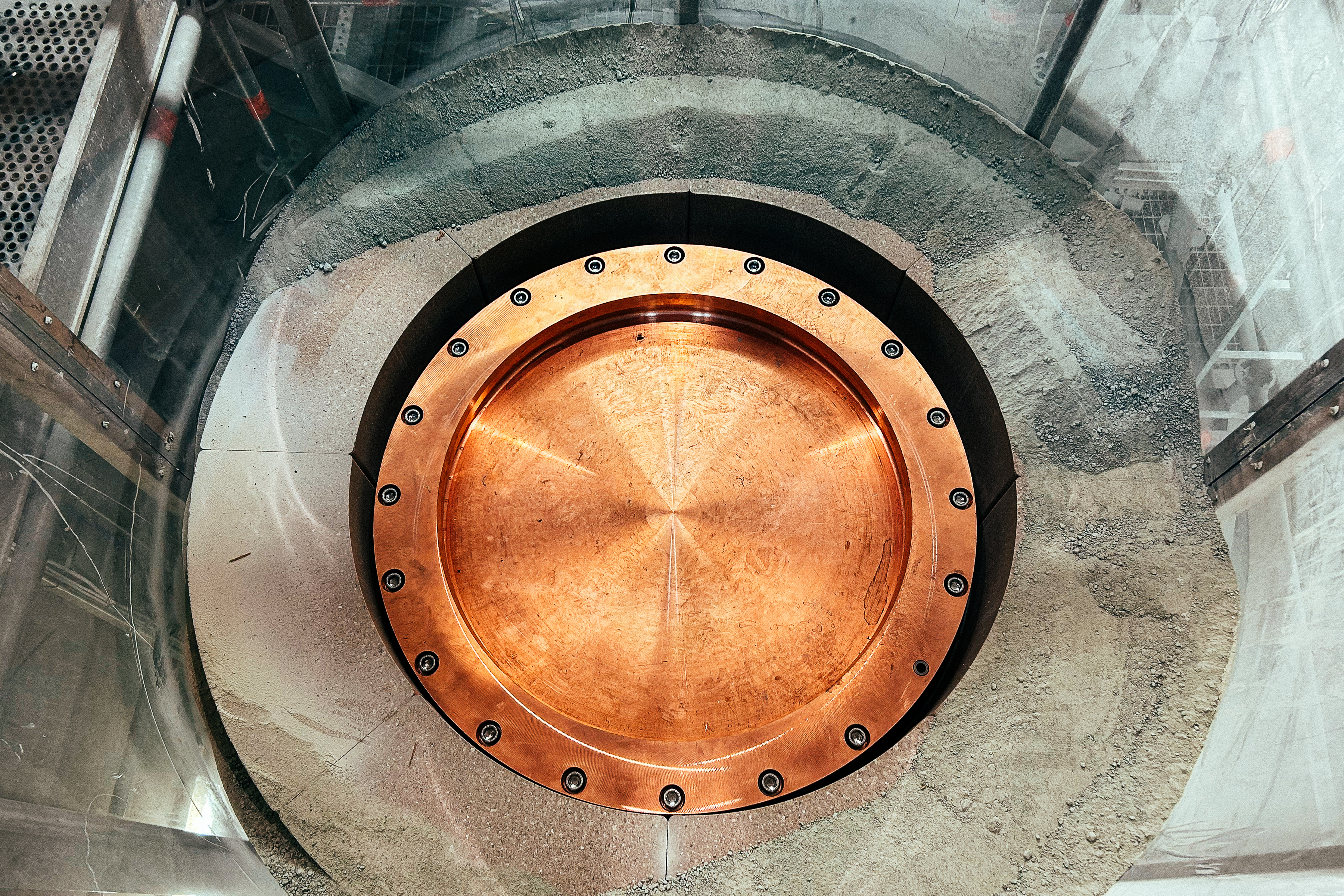
And there it is. This is what a successful full-scale buffer installation test looks like, carried out for the first time earlier this week.
Posiva’s Technical Manager Juha Riihimäki says that the installation was a success in one go. This was a significant step toward the start of final disposal operation as the actual installation process is a key element in the long-term safety of final disposal. It is also essential in view of regulatory requirements.
– To obtain the production licence, we need to be able to demonstrate that the installation of the final disposal canister can be done safely and according to plans. This will be demonstrated in another, new test later, but the test carried out now was, for us, important and a great accomplishment, Riihimäki says.
Eero Väisänen who attended the test on-site admits that the success of the test was hugely important.
– This was the first time that the installation of the canister and the buffer was carried out in full scale with bentonite. Exactly the same procedure as in actual final disposal. This also gave us the opportunity to ensure that the systems and controls also operate together as planned, Väisänen explains.
Last but not least
The KSAA vehicle used in the installation of the canister and the buffer has been one of the most demanding equipment assemblies for the final disposal facility and its completion has been a critical part in the progress of the project as a whole.
– In practice, KSAA has been the last important piece of production equipment still undergoing the manufacturing and commissioning stage, Riihimäki says.
Directly after the successful test, the vehicle was transported without problems into the underground final disposal facility for testing the handling of the canister in the receiving area as well as the automatic functions of the vehicle, among others.
– We could perform extremely important tests that are essential in terms of risk management. For example, we verified the correct functioning of remote connections, navigation, and high-precision positioning. The canister installation process requires an accuracy of about 5 millimetres, which means that everything must operate reliably, Väisänen points out.
In the upcoming weeks, some final above-ground tests are carried out on the KSAA vehicle before the actual commissioning tests which will take place during the second half of the year deep inside the Olkiluoto bedrock.
So, there is still some way to go but the accomplishments of the past week strengthen for their part the capabilities to move on to the next stages of final disposal operation.
-This is a really good basis to move on, Juha Riihimäki sums up.
Truly great feeling
For Eero Väisänen as well, the week was about as great as one dared to hope for.
– The full-scale buffer installation test was a success, the KSAA vehicle was successfully transported underground and the canister handling tests have progressed as planned. We have thousands of hours and many years of work behind us, which makes this accomplishment feel really, truly great, he sums up and thanks everybody involved in the process for their input.
– Our entire team went far and beyond. All these successes were due to their efforts more than anything, so a big thank you to everybody, Väisänen concludes.
Text: Ville Kulmala
Photos: Kari Koskinen ja Pasi Tuohimaa
Share